www.techaneesh.blogspot.com.

Saturday, February 23, 2013

Folded Light Bulb is World's Most Efficient..folded to resemble the stereotypical light bulb shape

NanoLight claims to be world's most efficient light bulb.
The NanoLight LED’s are directly attached to a printed circuit board that is folded to resemble the stereotypical light bulb shape


The NanoLight LED’s are directly attached to a printed circuit board that is folded to res...


Until recently LED light bulb manufacturers have struggled to find a solution in the 75 to 100-watt range which successfully replaces the soon-to-be redundant, energy crunching 100 W incandescent bulb in terms of size and brightness. Three friends from the University of Toronto are the latest to offer a feasible product to match the classic 100 W bulb without compromising on electricity consumption with their proposed NanoLight LED light bulbs.


Gimmy Chu, Tom Rodinger and Christian Yan of NanoLight met during a university solar car project back in 2005. With a shared enthusiasm for sustainable products they joined forces again three years ago and aim to launch three models of the Nanolight in the near future through the funding platform Kickstarter. The trio hopes their products will prove that true 100 W equivalent LED lighting can be achieved and that NanoLight can make good its claim as “the worlds most energy efficient light bulb.”


NanoLight’s signature product is a 12 W LED bulb that provides the equivalent of a 100 W classic bulb and gives off 1600 lumens. Whilst the 60 W LED range has proved successful, manufacture of higher wattage equivalents that fit into current light fixtures has been difficult. LED lights produce less heat then traditional bulbs, but this heat becomes an issue that shortens the lifespan and efficiency of the LEDs when the volume is increased for a higher wattage effect.


The NanoLight products claim to have addressed the LED heat issues and are also billed as omnidirectional, which is not a feature of the average LED bulb. The NanoLight LED’s are directly attached to a printed circuit board that is folded to resemble the stereotypical light bulb shape. The product testing that can be seen in the videos below shows that the LEDs withstand the heat issues within this format.


Although manufactured electronic circuit boards are well established, the folded design of the NanoLight will provide challenges for the team. Using surface mounting technology, the individual components will be placed into predefined positions and will require a low temperature soldering process to secure the components. Once this has been achieved a process will take place to assemble the circuit board into its bulb shape and secure on the screw base light fitting which is the current available option

.

The NanoLight operates at 133 lumens per watt  - the above chart shows the company's own c...
The NanoLight operates at 133 lumens per watt - the above chart shows the company's own comparison to other light bulbs on the market
The alternative to a 100 W incandescent bulb has until recently been a compact fluorescent light, if you have the time for them to warm up to maximum light output. The LED is a much more pleasing alternative not only for using less harmful materials during manufacture, but also by providing an instant warm neutral white full light on request and lasting a lot longer with an estimated lifespan of 30,000 hours.


  The NanoLight LED light bulb are available in Black or White versions  (Image: NanoLight)  Packaging for the new 75 to 100-watt equivalent NanoLight LED bulbs (Image: NanoLight)  The NanoLight team went through various prototype designs (Image: NanoLight)     The NanoLight comes in either 220V AC (Europe / Asia Pacific) or 120V AC (North America / ...  NanoLight’s estimates show that over 30,000 hours of usage an LED bulb can save a consumer...


In addition to the 12 W NanoLight, a 10 W NanoLight (75 W equivalent) and a 12 W NanoLight (1800+ Lumens) are also in the pipe. These three models are available in 120V AC and 220-240V AC versions to cater to different geographic regions. The NanoLight team has also received high demand for a dimmable version and are already working on a prototype model that can achieve this.
Despite this, NanoLight estimates that over a period of 30,000 hours of usage an LED bulb can save a consumer around seven times the expense of an equivalent periods usage of incandescent bulbs.
Other recent (and heavyweight) entrants into the 100-watt equivalent LED market include the Phillips 22 W LED and the 20 W bulb from Osram Sylvania, a division of Germany's Siemens AG.
The video below provides more information on the production and testing of the NanoLights.

Monday, February 18, 2013

E-waste Management In India-Electronic waste (e-waste) comprises waste electronics.....................

E-waste Management In India
The aim of this article is to spread awareness among our readers about the various issues involved in generation and management of e-waste, particularly from Indian perspective.
What is e-waste?Electronic waste (e-waste) comprises waste electronics/electrical goods that are not fit for their originally intended use or have reached their end of life. This may include items such as computers, servers, mainframes, monitors, CDs, printers, scanners, copiers, calculators, fax machines, battery cells, cellular phones, transceivers, TVs, medical apparatus and electronic components besides white goods such as refrigerators and air-conditioners.

E-waste contains valuable materials such as copper, silver, gold and platinum which could be processed for their recovery.
you are welcome to change your personal computer, cell phone, refrigerator, or for that matter any electronic or electrical gadget, but be careful while disposing of the old one. Throwing it into the dustbin is not the proper disposal of an electronic equipment which has attained obsolescence as per your judgement. It may end up adding to e-waste, which creates problems for the ecology in general and directly or indirectly for the living beings around there through air, water and soil pollution


What is e-waste?Electronic waste (e-waste) comprises waste electronics/electrical goods that are not fit for their originally intended use or have reached their end of life. This may include items such as computers, servers, mainframes, monitors, CDs, printers, scanners, copiers, calculators, fax machines, battery cells, cellular phones, transceivers, TVs, medical apparatus and electronic components besides white goods such as refrigerators and air-conditioners.

E-waste contains valuable materials such as copper, silver, gold and platinum which could be processed for their recovery.

Is e-waste hazardous?
E-waste is not hazardous per se. However, the hazardous constituents present in the e-waste render it hazardous when such wastes are dismantled and processed, since it is only at this stage that they pose hazard to health and environment.

Electronics and electrical equipment seem efficient and environmentally-friendly, but there are hidden dangers associated with them once these become e-waste. The harmful materials contained in electronics products, coupled with the fast rate at which we’re replacing outdated units, pose a real danger to human health if electronics products are not properly processed prior to disposal.

Electronics products like computers and cellphones contain a lot of different toxins. For example, cathode ray tubes (CRTs) of computer monitors contain heavy metals such as lead, barium and cadmium, which can be very harmful to health if they enter the water system. These materials can cause damage to the human nervous and respiratory systems. Flame-retardant plastics, used in electronics casings, release particles that can damage human endocrine functions. These are the types of things that can happen when unprocessed e-waste is put directly in landfill.
The scenario
The Basel Action Network (BAN) which works for prevention of globalisation of toxic chemicals has stated in a report that 50 to 80 per cent of e-waste collected by the US is exported to India, China, Pakistan, Taiwan and a number of African countries. This is done be-cause cheaper labour is available for recycling in these countries. And in the US, export of e-waste is legal.


e-waste recycling and disposal in China, India and Pakistan are highly polluting. Of late, China has banned import of e-waste. Export of e-waste by the US is seen as lack of responsibility on the part of Federal Government, electronics industry, consumers, recyclers and local governments towards viable and sustainable options for disposal of e-waste.

In India, recycling of e-waste is almost entirely left to the informal sector, which does not have adequate means to handle either the increasing quantities or certain processes, leading to intolerable risk for human health and the environment.

Dynamics of e-waste generation
Telecommunications and information technology are the fastest growing industries today not only in India but world over. Manufacturers’ Association for Information Technology (MAIT) has collected the following statistics on the growth of electronics and IT equipment in India:
1. PC sales were over 7.3 million units during 2007-08, growing by 16 per cent. There is an installed base of over 25 million units.
2. The consumer electronics market is growing at the rate of 13-15 per cent annually. It has an installed base of 120 million TVs.
3. The cellular subscriber base was up by 96.86 per cent during 2007-08. Its installed base is estimated to cross 300 million mark by 2010.

With the unprecedented induction and growth in the electronics industry, obsolescence rate has also increased. People are phasing out/replacing their IT, communication and consumer electronics equipment including white and brown goods as shown in Table II.

As per a GTZ-MAIT sponsored study conducted recently by IMRB, e-waste generated in India during 2007 was around 332,979 MT besides about 50,000 MT entering the country by way of imports. The reasons for generation of this large quantity of e-waste were unprecedented growth of the IT industry during the last decade, and the early product obsolescence due to continuous innovation. Thus the net effect is the e-waste turning into a fastest growing waste stream.

However, the total e-waste avail-able in 2007 for recycling and re-furbishing was 144,143 MT. Of this, only 19,000 MT of e-waste could be processed.

Components of e-waste management
The major components of e-waste management are:
1. e-waste collection, sorting and transportation
2. e-waste recycling; it involves dismantling, recovery of valuable resource, sale of dismantled parts and export of processed waste for precious metal recovery

The stakeholders, i.e., the people who can help in overcoming the challenges posed by e-waste, are:
1. Manufacturers
2. Users
3. Recyclers
4. Policy makers

e-waste concerns and challenges
1. Accurate figures not available for rapidly increasing e-waste volumes—generated domestically and by imports
2. Low level of awareness among manufacturers and consumers of the hazards of incorrect e-waste disposal
3. No accurate estimates of the quantity of e-waste generated and recycled available in India
4. Major portion of e-waste is processed by the informal (unorganised) sector using rudimentary techniques such as acid leaching and open-air burning, which results in severe environmental damage
5. e-waste workers have little or no knowledge of toxins in e-waste and are exposed to health hazards
6. High-risk backyard recycling operations impact vulnerable social groups like women, children and immigrant labourers
7. Inefficient recycling processes result in substantial losses of material value and resources
8. Cherry-picking by recyclers who recover precious metals (gold, platinum, silver, copper, etc) and improperly dispose of the rest, posing environmental hazards
9. No specific legislation for dealing with e-waste at present


Status of e-waste initiatives

The Ministry of Environment & Forests (MoEF) of the government of India is responsible for environmental legislation and its control. The Central Pollution Control Board (CPCB), an autonomous body under the MoEF, plays an important role in drafting guidelines and advising the MoEF on policy matters regarding environmental issues. Historically, in 2001 in cooperation with MoEF, the German Technology Cooperation (GTZ) began work on hazardous waste management in India through the advisory services in environmental management. Subsequently, Swiss Federal Laboratories for Material Testing and Research (EMPA) started to implement its global programme ‘Knowledge Partnerships in e-waste Recycling.’

Combining the knowledge and technical expertise of EMPA on e-waste management, coupled with the field experience of the Indo-German projects in managing hazardous waste in India, the Indo-German-Swiss e-waste initiative was born in 2004. The vision of this initiative is to establish a clean e-waste channel that is a:
1. Convenient collection and disposal system for large and small consumers to return all their e-waste safely
2. Voluntary system for modern and concerned producers to care for their product beyond its useful life
3. Financially secure system that makes environmentally and socially responsible e-waste recycling viable

The objectives of the initiative are:
1. Reduce the risks to the popula-tion and the pollution of the environ-ment resulting from unsafe handling
2. Focus on knowledge transfer to and skills upgrade of all involved stakeholders through trainings and seminars
3. Target mainly the existing informal recyclers allowing for their maximum but safe participation in future e-waste management by facilitating their evolution and integration in formal structures

The milestones achieved so far are:
1. Improved awareness:
• Three WEEE Care! Initiative workshops in Bangalore sup-ported by the Goethe Institute
• National e-waste workshop in Delhi, hosted by MoEF

2. Improved stakeholder engage-ment:
• Formation of the e-waste Agency (EWA) brings together industry, government and NGO to work on a sustainable e-waste management strategy for Bangalore
• First national e-waste workshop held, defined a way forward
• First national workshop on e-waste guidelines held, organised by MoEF

3. Improved estimates of e-waste:
• Rapid assessments in Delhi and Bangalore of the quantities being generated, and identification of the e-waste recycling hot-spots
• National-level desk study to assess e-waste quantities

A national-level assessment of electronics and electrical equipment waste (WEEE) by MoEF/CPCB/IRG/GTZ lists the top ten most polluting states and cities of India as shown in Tables III and IV. The figure are taken from the presentation of Dr Dilip B. Boralkar at National Conference on E-Waste Management, an Indo-German-Swiss E-Waste Initiative, at New Delhi on December 10, 2008.

The MAIT-GTZ study on e-waste found that 94 per cent of the organisations studied did not have any policy on disposal of obsolete IT products. Though many respondents (200 corporates and 400 households) were aware of e-waste, they were lacking in action.

Vinnie Mehta, executive director of the MAIT, in his presentation at National Conference on E-Waste Management (an Indo-German-Swiss E-Waste Initiative), listed the following legislations that cover different aspects of e-waste:
1. The hazardous waste (management and handling) rules, 1998 as amended in 2008 for toxic content—registration mandatory for recyclers
2. Municipal solid waste management and handling rules for non-toxic content
3. Basel convention for regulating trans-boundary movement
4. Foreign trade policy, which restricts import of second-hand computers and does not permit import of e-waste
5. Guidelines by Central Pollution Control Board (2008)

The guidelines notified in April 2008 identify and recognise:
1. Producers’ responsibility
2. RoHS (restriction on hazardous substances)
3. Best practices
4. Insight into technologies for various levels of recycling

Mehta said that the guidelines explicitly mention the need for a separate legislation for implementing producers’ responsibility. He said that e-waste is ‘distinct’ as it is an end-of-consumption waste while hazardous waste results from a distinct industrial process. The Environment Protection Act provides for separate regulations for waste with ‘distinct’ characteristics—Biomedical Wastes (M&H) Rules 1998, Batteries (M&H) Rules 2001, etc.

Advocating a separate legislation for e-waste, he said that in his recent presentation to members of the parliament he has emphasised that e-waste value chain is rather complex as it involves multiple players—producers, distributors, retailers, end consumers, collection system and recyclers—while hazardous waste chain involves only the occupier/generator and the operator. Recovery of non-ferrous metals and reprocessing of used oil are the only two major activities in hazardous waste recycling, while e-waste recycling involves refurbishment for reuse, dismantling and precious metal recovery, which is a complex process.

Structure of the Proposed e-Waste Legislations
1. Title: E-waste (Management & Handling) Rules to be published under the Environment Protection Act
2. Objective: To put in place an effective mechanism to regulate the generation, collection, storage, transportation, import, export, environmentally sound recycling, treatment and disposal of e-waste. This includes refurbishment, collection system and producer’s responsibility, thereby reducing the wastes destined for final disposal.
3. Essence: The producer of electrical and electronic equipment is responsible for the entire life cycle of its own branded product and in particular the environmentally sound end-of-life management and facilitating collection and take back.
4. Responsibility of each element in the e-waste value chain:
• Producers
• Dealers
• Collection agencies/collection Centres
• Dismantlers
• Recyclers
• Consumer and bulk consumers
5. Procedure for authorisation of producers, collection agencies, dismantlers, recyclers and enforcement agencies
6. Procedure for registration/renewal of registration of recyclers
7. Regulations for import of e-waste
8. Liability of producers, collection agencies, transporters, dismantlers and recyclers
9. Information & tracking
10. Elimination of hazardous substances used in e-equipment
11. Setting up of designated authority to ensure transparency, audit and inspect facilities, examine authorisation/registration, etc
e-nam (EWA Newsletter for Awareness and Management) in its September 2008 issue has brought out the latest activities of EWA, MAIT-GTZ and others involved in the e-waste field. It has published extracts of an article titled ‘Progress on e-waste, but Too Slow’ by Mini Josheph Tejaswi. The statements of various experts quoted in the article are reproduced below:

Lakshmi Raghupathy, former director in the ministry of environment and forest and an expert in e-waste management, said that governmental regulations should make the producers solely responsible for the entire life-cycle—from manufacturing to recycling—of their products.

Nitin Gupta, CEO of Attero Recycling, said enterprises should be extremely careful and responsible while throwing their unwanted computers and storage devices.

Computer manufacturers in India are slowly getting active in e-waste management. “We are working with all stakeholders in the e-waste management eco-system,” said S. Shankar, director (manufacturing and supply chain) in HP. The company has initiated a three-pronged strategy: partner with e-waste recyclers, build awareness among individual/enterprise customers and work with NGOs, recyclers, collectors and dismantlers.

Anne Cheong, senior service specialist in Dell, said each manufacturer has an individual producer responsibility. “We start from home. We have proper recycling facility in all countries including India. We are exploring that in Karnataka as well.”

Though companies claim they are taking action, many don’t believe enough is being done. “Things are very slow. Corporates are yet to understand the importance of it,” said Wilma Rodrigues, founder member of Saahas, a development organisation. Decisions related to e-waste management, she said, are still taken by junior employees in organisations, with top executives not even looking at it. Almost every company has some mention on its website on e-waste management, but very few are doing anything. The country has twelve authorised e-waste recyclers including e-Parisara and Ash in Bangalore, Tessam in Chennai and Eco-Reco in Mumbai. Ramky Group is setting up the country’s largest integrated e-waste management facility in Bangalore in collaboration with GTZ, while Attero is building an integrated e-waste recycling plant in Utter Pradesh.

D.C. Sharma, vice president of Ramky Enviro Engineers, cautioned that no player should indulge in cherry-picking, collect whatever one thinks is worth and leave the hazardous portions out. Ramky is also building a transfer storage disposal facility (landfill) for hazardous waste at Dobbespet on Tumkur Road.

Finally, through improved e-waste management in the major Indian cities, the e-waste initiatives taken in the country will achieve better environ-mental conditions. Moreover, health conditions of workers active in the e-waste recycling sector will enormously improve at the local level. As an overall effect, the living conditions for the neighbouring population will be better. The already existing schemes of e-waste recycling and material recovery, mainly in the informal sector, will be transformed to transparent and workers- and environment-friendly methods. In the long term, the problem of improper e-waste recycling will disappear due to improved methods, implementation of a take-back system and consideration of the extended producer’s responsibility.

Experience exchange on national and international levels, including know-how transfer, is being facilitated through the various initiatives. Thus, a dialogue platform for Indian and European e-waste experts has been created, opening the doors for future industries to be developed and cooperation activities to be per-formed for technology and knowledge transfer.

Friday, February 15, 2013

Graphene from gases for new, bendable electronics

Graphene from gases for new, bendable electronics.

download


Flexible, translucent and ultrathin, layers of carbon atoms called graphene are also excellent electrical conductors that could find use in flexible computer displays, molecular electronics and new wireless communications. Making high-quality graphene sheets is usually a slow, painstaking process, but now several research groups have discovered ways to make patterned graphene circuits using techniques borrowed from microchip manufacturing, which can be scaled up for mass production.


Layers of graphene — carbon atoms arranged in a chicken-wire pattern one atom thick — can be manually peeled away from the graphite in pencils using adhesive tape. In contrast, the new technique causes carbon atoms in a vapor of hydrocarbons to settle onto a nickel surface and arrange into graphene’s characteristic pattern of hexagons.
Using standard chip-making techniques, circuit designs are etched into the nickel surface. As the graphene layers form, they take on the shape of the circuit template, researchers report in the Jan. 15 Nature.


“Finding a suitable material that’s transparent yet conducting and thin is a big deal,” says Philip Kim, coauthor of the study and a condensed matter physicist at Columbia University. Kim and his colleagues showed that the vapor-deposited graphene retains the excellent electrical properties of manually peeled graphene, even when bent on a flexible surface

Graphene-based nitrogen dioxide gas sensors.


graphene could selectively absorb/desorb NOx molecules at room temperature. Chemical doping with NO2 molecules changed the conductivity of the graphene layers, which was quantified by monitoring the current–voltage characteristics at various NO2 gas concentrations. The adsorption rate was found to be more rapid than the desorption rate, which can be attributed to the reaction occurred on the surface of the graphene layer. The sensitivity was 9% when an ambient of 100 ppm NO2 was used. Graphene-based gas sensors showed fast response, good reversibility, selectivity and high sensitivity. Optimization of the sensor design and integration with UV-LEDs and Silicon microelectronics will open the door for the development of nano-sized gas sensors that are extremely sensitive.

Full-size image (30 K)


. 2. The current–voltage characteristics under N2 and NO2 gas ambients at room temperature.

Full-size image (18 K)


 3. The time response and decay of graphene-based gas sensors when a NO2 ambient (1% concentration) was used.

Full-size image (20 K)

A new study from Rensselaer Polytechnic Institute demonstrates how graphene foam can outperform leading commercial gas sensors in detecting potentially dangerous and explosive chemicals. The discovery opens the door for a new generation of gas sensors to be used by bomb squads, law enforcement officials, defense organizations, and in various industrial settings.


The new sensor successfully and repeatedly measured ammonia (NH3) and nitrogen dioxide (NO2) at concentrations as small as 20 parts-per-million. Made from continuous graphene nanosheets that grow into a foam-like structure about the size of a postage stamp and thickness of felt, the sensor is flexible, rugged, and finally overcomes the shortcomings that have prevented nanostructure-based gas detectors from reaching the marketplace


Tuesday, February 12, 2013

The human battery: anything that achieves motion creates energy.

The human battery: anything that achieves motion creates energy.


As time passes we expect consumer goods, especially electronics, to get smaller, faster, and more powerful. Nowadays, however, much of the emphasis is on making technologies more efficient. It’s using masses of human beings as heat sources for buildings and perhaps one day capturing the kinetic energy created by cars, trucks, bicycles and pedestrians to power whole sections of cities.

It is, in essence, solving our energy crisis one human at a time. And this economizing approach ­­­­­­­­­­­– to produce more from less – could have a tremendous impact on future products and brands. That’s because anything that achieves motion creates energy. IBM Distinguished Engineer Harry Kolar predicts that in the coming years, “advances in renewable energy technology could make it possible for us to draw on power generated by everything from our running shoes to the ocean’s waves.”
Naturally, enslaving humans to function as energy sources recalls the movie “The Matrix,” where machines converted humans into batteries to fuel their repressive robotic civilization. While Sci-fi fantasy,

 it is based on scientific principles. The average person tosses off 100 watts of excess heat just by standing around and stores as much energy in fat as a one-ton battery. Architects in Paris have taken this ambient energy, added to it heat produced from the friction of metal wheels on metal tracks generated in Paris’s Rambuteau Metro station and supply heat to 17 apartments in a nearby public housing project. This approach has also been tested in Stockholm, Sweden, in the Central Station, where a quarter-of-a-million travelers pool their ambient warmth to heat a 13-story office building nearby. And in inside the gargantuan Mall of America in Minneapolis, which is heated from human activity, sunlight streaming through windows, and light fixtures, it might be subfreezing outside but a downright balmy 70 inside.

Six billion people on the planet and we’re the ones using all of this energy. The more we skim from our fellow humans, the less we’ll waste producing it, and in recent years there have been several inventions to help usher in this new energy-independence era. Shoes in development can collect energy from a tiny generator inserted into the soles and a wearable vest can power medical sensors to check high blood pressure and other symptoms that could be dispatched wirelessly back to a doctor or hospital.

Human organs could help power devices like a pumping heart driving a pacemaker or knee brackets replacing a soldier’s battery packs by harvesting energy from his movement. One gym in Portland, Oregon, boasts elliptical machines and stationery bikes that convert leg churning into electricity to help power the building. Dance clubs are powering LED-light shows by harvesting power generated by hundreds of dancers. Princeton University engineers developed a small wearable chip that can capture the energy created by our natural movements to juice small gadgets like a smartphone and other device. (Bonus: each person turns into a giant Mophie!)

Meanwhile, in Durham, England, a crematorium announced it would take the waste heat from the burning of corpses and sell the energy to a local power utility. Each incinerated body creates 150 kilowatt-hours, which is “enough to power 1,500 televisions for an hour.” And on a grander scale, sidewalk panels to stash the kinetic energy of thousands of pedestrians could power streetlights while speed bumps in fast food parking lots could “capture kinetic energy from vehicles that would otherwise be lost when drivers hit the brakes to pick up their Whoppers.”
Imagine if you could secrete panels like these under roads and sidewalks in places like New York City. You might not be able to power Times Square, but you could generate electricity from activities that once wasted it – and go a long way to help forge a more energy-efficient society.

Friday, February 8, 2013

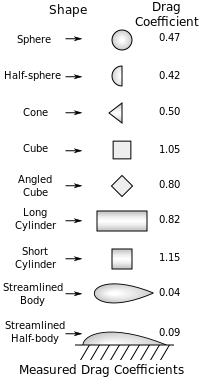
Half-a-loaf-of-automotive-aerodynamics(AA)

Half-a-loaf-of-automotive-aerodynamics

what is aerodynamics?Aerodynamics is a branch of dynamics concerned with studying the motion of air, particularly when it interacts with a moving object as defined by wikipedia.

Aerodynamics of automobiles:

drag:
drag is a fluid dynamics term, sometimes called as air resistance or fluid resistance. It is defined as "forces that oppose the relative motion of an object through a fluid. Drag forces act in a direction opposite to the oncoming flow velocity". (wikipedia)
Shape and flow
Form drag

Skin friction
Flow plate.svg 0% 100%
Flow foil.svg ~10% ~90%
Flow sphere.svg ~90% ~10%
Flow plate perpendicular.svg 100% 0%


lift:
A fluid flowing past the surface of a body exerts a surface force on it. Lift is defined to be the component of this force that is perpendicular to the oncoming flow direction. It contrasts with the drag force, which is defined to be the component of the surface force parallel to the flow direction.(wikipedia)


Note: In aircrafts Lift/drag ratio is expected to be higher. But this is not the case in automobiles where lift is to be reduced and drag too to be reduced. What is especially required in an autombile such as a racing car is the downforce (as opposed to the lift required in aircrafts).


Upper: non-aerodynamic car; Lower: aerodynamically improved design
From: http://www.generalamherst.com

A diffuser is seen in most racing cars:


Rear diffuser of Porsche - Courtesy: Wikipedia


Rear spoiler of Toyota - Courtesy: Wikipedia


Front Air Dam of Mazda - Courtesy: Mazda

Please visit hotrod for a fine detailed description of the role of aerodynamics in automobiles!


Human Power is the Future

Human Power is the Future.

Human Power FutureEngineers have developed a device that may change the way that we power many of our smaller gadgets and devices. By using out natural body movement, they have created a small chip that will actually capture and harness that natural energy to create enough energy to power up things such as a cell phone, pacemaker and many other small devices that are electronic.

The chip is actually a combination of rubber and ceramic nanoribbons. When the chip is flexed, it generates electrical energy. How will this be put to use? Think of rubber soled shoes that have this chip embedded into them and every time a step is taken, energy is created and stored. Just the normal walking around inside the office during a normal work day would be enough to keep that cell phone powered every day.

An application that has pacemaker users excited is the fact that this chip could be placed in proximity of the lungs and it would create natural power for their pacemakers. Currently, the only way to replace the battery is to go through another surgery, but the natural motion of the lungs would create enough movement to continuously power the device via this chip. Finally, only one surgery would be needed and unless there was actually a problem with the pacemaker itself, there would no longer be the need to go under the knife again.

This technology is an incredible development in that it can have so many different applications. The engineers at Princeton were able to combine the materials in a way that created an electric charge when pressure is applied to the chip. It actually converts about 80% of the mechanical energy into electrical energy. In the case of the pacemaker, this means a constant power source as the lungs would obviously continuously apply the pressure that was needed to create the energy.
Additionally, the new power chip is pretty much ready to go in regards to being an implant device. Because of the materials that it is made up of, the body should readily accept it without fear of rejection. When we think of how many varieties of medical devices that are available and require power sources, this is a truly amazing invention.

While it would appear that the technology itself is very futuristic, once it is able to be mass produced, it is probably reasonable to assume that the chips will not actually be all that expensive because of the materials that are being used in its construction. They may be a bit pricey when they first hit the market, but as they become more widely used and available, that price tag should come down.
Similar technology has already been introduced in other products, but nothing that has the flexibility of this product. Human power is nothing new, but to be able to have medical devices implanted that require nothing more than normal breathing or walking is quite amazing.

Hydrogen Gas Production Doubled with New Super Bacterium

Hydrogen Gas Production Doubled with New Super Bacterium.

Hydrogen gas is today used primarily for manufacturing chemicals, but a bright future is predicted for it as a vehicle fuel in combination with fuel cells. In order to produce hydrogen gas in a way that is climate neutral, bacteria are added to forestry or household waste, using a method similar to biogas production. One problem with this production method is that hydrogen exchange is low, i.e. the raw materials generate little hydrogen gas.

Hydrogen Gas ProductionNow, for the first time, researchers have studied a newly discovered bacterium that produces twice as much hydrogen gas as the bacteria currently used. The results show how, when and why the bacterium can perform its excellent work and increase the possibilities of competitive biological production of hydrogen gas.

There are three important explanations for why this bacterium, which is called Caldicellulosiruptor saccharolyticus, produces more hydrogen gas than others. One is that it has adapted to a low-energy environment, which has caused it to develop effective transport systems for carbohydrates and the ability to break down inaccessible parts of plants with the help of enzymes. This in turn means it produces more hydrogen gas. The second explanation is that it can cope with higher growth temperatures than many other bacteria. The higher the temperature, the more hydrogen gas can be formed,” summarizes Karin Willquist, doctoral student in Applied Microbiology at Lund University. She will soon be presenting a thesis on the subject.

The third explanation is that the CS bacterium can still produce hydrogen gas even in difficult conditions, for example high partial hydrogen pressure, which is necessary if biological hydrogen gas production is to be financially viable.
On the other hand, the bacterium does not like high concentrations of salt or hydrogen gas. These affect the signaling molecules in the bacterium and, in turn, the metabolism in such a way that it produces less hydrogen gas.
“But it is possible to direct the process so that salt and hydrogen gas concentrations do not become too high,” points out Karin Willquist.
When hydrogen is used as an energy carrier, for example in car engines, water is the only by-product. However, because the hydrogen gas production itself, if it is carried out by a conventional method, consumes large amounts of energy, hydrogen gas is still not a very environmentally friendly energy carrier.
Reforming of methane or electrolysis of water are currently the most common ways to produce hydrogen gas. However, methane gas is not renewable and its use leads to increased carbon dioxide emissions. Electrolysis requires energy, usually acquired from fossil fuels, but also sometimes from wind or solar power. Hydrogen gas can also be generated from wind power, which is an environmentally friendly alternative, even if wind power is controversial for other reasons.
“If hydrogen gas is produced from biomass, there is no addition of carbon dioxide because the carbon dioxide formed in the production is the same that is absorbed from the atmosphere by the plants being used. Bio-hydrogen gas will probably complement biogas in the future,” predicts Karin Willquist.
Today there are cars that run on hydrogen gas, e.g. the Honda FCX, even if they are few in number. The reason for this is that it is too expensive to produce hydrogen gas and there is no functioning hydrogen infrastructure.
“A first step towards a hydrogen gas society could be to mix hydrogen gas with methane gas and use the existing methane gas infrastructure. Buses in Malmö, for example, drive on a mixture of hydrogen gas and methane gas,” says Karin Willquist.
Caldicellulosiruptor saccharolyticus was isolated for the first time in 1987 in a hot spring in New Zealand. It is only recently that researchers have really begun to realize the potential of the bacterium.


Thursday, January 31, 2013

GAGAN is expected to replace the GPS receivers and provide data integrity


GAGAN is expected to replace the GPS receivers and provide data integrity.


What is the origin of the name ‘GAGAN’?

As you are aware GPS meets most of the navigation requirements of users. However, to improve the performance and integrity of the GPS system and to meet civil aviation requirements, the basic GPS system is to be augmented by GEO satellite with corrections and confi dences. Hence, the name GAGAN which is an acronym for GPS Aided Geo Augmented Navigation System was chosen. Gagan is a Hindi word of Sanskrit origin for the sky and aptly suits the project.

We are expected to have a certified GAGAN by 2013. How close are we to this?

With the completion of installation, integration and testing of all ground elements, the major requirements of facility certifi cation has been completed. The integration of GEO satellites with the ground elements and other aspects related to certifi cations have been taken up. The system is expected to be certifi ed by the 3rd quarter of 2013. The GAGAN will be certifi ed by DGCA to provide NPA (Non Precision Approach) services of RNP-0.1over Indian FIR (Flight Information Region) and PA (Precision Approach) service of APV- 1.0/APV-1.5 over Indian landmass.
 GAGAN 520x346 GPS Aided Geo Augmented Navigation   GAGAN launched in India to Control Air Traffic

What are the user segments going to be benefitted by GAGAN?

Even though GAGAN is being developed primarily for civil aviation applications over Indian region, it is expected to provide enhanced service level to the user segments like, Agriculture, Emergency response, Business solutions, Geographical data collection, Natural resources, Land management, Scientifi c research, Geodynamics ,Urban Mapping, Unmanned vehicles, Vehicle tracking, Air navigation, Car navigation, Maritime applications, Search And Rescue Operations, GIS, Timing applications, Canal Transit Management, etc In short, it is expected to replace the GPS receivers and provide data integrity. Also, GAGAN will aid the DGPS users with minimum change, risk and cost.

What is the reach of GAGAN going to be and how other countries will be able to utilize its services?

The GAGAN system intends to deploy and certify an operational Satellite Based Augmentation System (SBAS) for the Indian Flight Information Region (FIR), with expansion capability to neighboring FIRs. When commissioned for service, GAGAN will provide a civil aeronautical navigation signal consistent with International Civil Aviation Organization (ICAO) Standards and Recommended Practices (SARP) as established by the Global Navigation Satellite System (GNSS) Panel. The neighboring countries can utilize GAGAN system by having reference stations within their country. As the GAGAN GEO foot print extends from Middle East Asia to Australia, the augmentation can be provided over this region using GAGAN system. GAGAN will bridge the gap between Europe (served by EGNOS) and Japan (served by MSAS).

What is the role of private sector in the development of GAGAN?

Navigation projects have created awareness among the Public Sector Undertaking and Indian industries and they have been contributing to GAGAN projects. To name a few, ECIL (Electronics Corporation of India Limited) was responsible for designing and development of 11 meter antennae installed at INLUS (Indian Land Uplink Station). Accord Software is developing GAGAN and IRNSS receivers. Software development of INLUS RFU (Radio Frequency Unit) systems will require the participation of software companies capable of developing DO-178B compliant software. Many other industries are involved in various subsystems of Navigation projects. Even though the Indian private sector participation is limited in the development of GAGAN, there is tremendous scope for the industry to develop user segment equipments for the GAGAN system. The industries need to come up innovative solution to meet diverse user positioning and timing requirements. Also, hand in hand there is a need to develop applications suiting Indian conditions and requirements using GAGAN signals especially in the areas of survey, intelligent transportation systems, location based systems, disaster management, maritime etc.

What are your plans to create awareness among prospective users of GAGAN?

GNSS user meet is planned to be jointly organized by ISRO and AAI on February 23rd 2012 at ISRO Satellite Centre, Bangalore. This will be a platform where all the parties involved in Navigation will interact and prospective users will greatly benefit. The plan is to conduct such meets at regular intervals to ensure that the benefit of GAGAN utilization is maximized.

How interoperable is GAGAN going to be with other SBAS systems?

The functional performance of GAGAN will meet the accuracy, integrity, continuity and availability requirements specified for aviation by ICAO. The system will be inter-operable with other international SBAS systems like US-WAAS, European EGNOS, and Japanese MSAS etc and provide seamless air navigation across regional boundaries utilizing same signal frequency.

Interference and jamming with satellite signals are becoming major threats. How serious such threats are in the context of GAGAN?

The threat to GAGAN signals is similar in nature to any other GNSS system.

Sunday, January 27, 2013

The e-cigarette is meant to mimic the experience

What you need to know about e-cigarettes

What you need to know about e-cigarettes
As tobacco use continues its inexorable fall from grace, a growing number of people are turning to electronic cigarettes. These nifty electrical inhalers are being seen — and sometimes even marketed — as a "healthier" alternative to smoking tobacco. But are they really a viable alternative to cigarettes, or just a passing fad? What is it like to smoke one? And are they really safer than conventional cigarettes? Here's what you need to know about the e-cigarette.

What is it?

The e-cigarette is meant to mimic the experience of smoking a real one. It looks like a conventional cigarette, and is used in nearly the exact same way — less the fire and smoke. In fact, the experience is so true to traditional smoking that some consider it a viable cessation therapy.
Each e-cig is powered by a small lithium battery that atomizes a propylene glycol/nicotine solution. The substance that's being inhaled even looks like smoke, but it's a vapor similar to fog — albeit a nicotine drenched fog; the amount of nicotine it produces closely approximates what's found in a conventional cigarette. Starter kits range in price from $40 to $100, and the liquid refills costs about $25 each — what's the equivalent of five packs of cigarettes. Some models even allow for recharging through the USB port of a computer.
Manufacturers say — much to the chagrin of federal regulators — that it's a much cleaner and safer way to inhale nicotine. And unlike cessation patches or gum, the experience is meant to be enjoyed, hence the assortment of flavors that have been made available, like menthol, chocolate and strawberry.
The technology was first conceived by American Herbert Gilbert in 1963, but its modern form took shape back in 2003 owing to the work of China's Hon Lik and his company, Golden Dragon Holding (which has since changed its name to Ruyan, meaning "like smoking"). Though once a lone player, the company now has plenty of rivals — all of whom are vying for space in a potentially lucrative market.

What's the experience like?

To get a better sense of what it's like to smoke an e-cigarette, we spoke to Jayar La Fontaine, a Toronto resident who took up the habit three months ago.
"I'm probably an atypical user of e-cigarettes," he told io9. "I was never a heavy user of tobacco in the first place — but I've always loved the effects of nicotine, what tends to sharpen my thinking." La Fontaine was exposed to e-cigarettes while attending Burning Man in 2011. There, he met a number of users who, like him, were not prior smokers.
For La Fontaine, the initial appeal of e-cigarettes had a lot to do with his asthma. "I would do some casual smoking, but it would make me feel absolutely awful afterward," he said. This was frustrating, as he enjoyed the social aspects — what he calls the "nicotine consumption ritual."
So, with the introduction of the e-cigarette, he felt that he didn't have to worry so much about the harsh toxic chemicals found in tobacco. "It's a safer delivery system for a social drug that I enjoy using every once in awhile," he said.
In terms of the experience itself, La Fontaine describes the effect as a bit muted and not as acute as when smoking traditional cigarettes. He also doesn't get a headrush or dizziness following inhalation.
"But it also doesn't irritate my lungs," he told us, "not the way that regular cigarettes do — though I occasionally feel a tingly sensation."
We asked him if he has any long term concerns about prolonged use. After a slight pause, La Fontaine admitted that he's curious to see what the long term studies will show. "I do have concerns about the overuse of nicotine because it does play with our reward system, he says. "I worry about its addictive qualities — and how it might be affecting my behavior."
And indeed, he's worried that a dependency has already started to take hold.
"I have to admit, even though it's been only three months, when I misplace my e-cigarette I immediately scramble to find out where I left it — and I don't leave home without it. It's something I'm starting to be increasingly aware of."

But is it safe?

As La Fontaine pointed out, there simply isn't enough information yet to prove safety. This has sparked a firestorm of criticism against its use, and even some outright bans.
As it stands, the sale of e-cigarettes is prohibited in Australia, Canada, Israel, and Hong Kong. Specifically, these products cannot be sold in a retail space, nor can they be marketed. And what's being controlled is not the e-cigarette device itself, but the e-liquid cartridges. Much of the criticism also has to do with claims being made by certain e-cig manufacturers, many of whom claim that it's a safer alternative. While they may eventually be proven right, federal regulators like the U.S. Food and Drug Administration accuse them of making unsubstantiated claims. And indeed, back in 2009 the FDA seized an inbound shipment from China on these very grounds.
Other concerns are that these products are being sold to children, and that there's a heightened chance of nicotine overdose given the ease with which it can be consumed. What's also not known is whether there's a threat to non-users from "second hand vapor."
As for its safety, preliminary tests by the FDA indicated that they do contain some dangerous cancer-causing chemicals, but at lower levels than regular cigarettes.
Actually, as Boston University School of Public Health professor Michael Siegel has pointed out, at much lower levels. Speaking to NPR he said, "It is comparable to what is present in nicotine-replacement products, which are on the market, and, in fact, if you look at the actual levels of the carcinogens in electronic cigarettes, they're about 1,400 times lower than in Marlboros."
Siegel would know. He was involved in a 2010 study published in the Journal of Public Health Policy which indicated that e-cigarettes were in fact safer than cigarettes:
Few, if any, chemicals at levels detected in electronic cigarettes raise serious health concerns. Although the existing research does not warrant a conclusion that electronic cigarettes are safe in absolute terms and further clinical studies are needed to comprehensively assess the safety of electronic cigarettes, a preponderance of the available evidence shows them to be much safer than tobacco cigarettes and comparable in toxicity to conventional nicotine replacement products.
Their survey reviewed 16 laboratory studies that identified the components in electronic cigarette liquid and vapor. The researchers found that carcinogen levels in electronic cigarettes are up to 1,000 times lower than in tobacco cigarettes. Siegel went on to claim that, "The truth is, we know a lot more about what is in electronic cigarettes than regular cigarettes."
At the same time, other studies are showing that e-cigarettes do in fact harm the lungs.
FDA Deputy Commissioner Joshua Sharfstein agrees with the concerns and says consumers should be wary — that it's premature to be jumping on the e-cig bandwagon.
"Some products, which are marketed as exactly the same, have wildly variable amounts of nicotine in them," he told NPR. "One of the products has a poison in it — that is diethylene glycol. And what that indicates is that we don't really know much at all about the way these things are produced."

A lesser evil?

Not surprisingly, tobacco companies are having a fit over e-cigarettes — what's a clear and present danger to their business.
"This is exactly what the tobacco companies have been afraid of all these years, an alternative method of delivering nicotine that is actually enjoyable," said David Sweanor when speaking to the LA Times. He's an adjunct law professor at the University of Ottawa who specializes in tobacco issues. "It took the Chinese, who are very entrepreneurial, and not burdened with all kinds of regulation, to take the risk."
All this said, it's a clear case of vapor-inhaler beware. Not only are the long term impacts of e-cigarette use extremely unclear, it's obvious that nicotine addiction is a necessary part of the equation. As La Fontaine admitted, while he does enjoy the benefits of nicotine, it's a potential problem, one that may already be impacting on his behavior.
Until more is known, it's probably best to exercise caution.

Wednesday, January 23, 2013

Electronic contact lens displays pixels on the eyes


Electronic contact lens displays pixels on the eyes


Rabbit's-eye.jpg            

The future of augmented-reality technology is here - as long as you're a rabbit. Bioengineers have placed the first contact lenses containing electronic displays into the eyes of rabbits as a first step on the way to proving they are safe for humans. The bunnies suffered no ill effects, the researchers say.  

The first version may only have one pixel, but higher resolution lens displays - like those seen in Terminator - could one day be used as satnav enhancers showing you directional arrows for example, or flash up texts and emails - perhaps even video. In the shorter term, the breakthrough also means people suffering from conditions like diabetes and glaucoma may find they have a novel way to monitor their conditions.

In February, New Scientist revealed the litany of research projects underway in the field of contact lens enhancement. While one company has fielded a contact lens technology using a surface-mounted strain gauge to assess glaucoma risk, none have built in a display, or the lenses needed for focused projection onto the retina - and then tested it in vivo. They have now.

"We have demonstrated the operation of a contact lens display powered by a remote radiofrequency transmitter in free space and on a live rabbit," says a US and Finnish team led by Babak Praviz of the University of Washington in Seattle.

"This verifies that antennas, radio chips, control circuitry, and micrometre-scale light sources can be integrated into a contact lens and operated on live eyes."

terminator1008879b.jpg           I'll be back: Could electronic contact lenses give humans Terminator-like vision in the future? (Image: Solent News & Photo Agency/Rex Features)

The test lens was powered remotely using a 5-millimetre-long antenna printed on the lens to receive gigahertz-range radio-frequency energy from a transmitter placed ten centimetres from the rabbit's eye. To focus the light on the rabbit's retina, the contact lens itself was fabricated as a Fresnel lens - in which a series of concentric annular sections is used to generate the ultrashort focal length needed.

They found their lens LED glowed brightly up to a metre away from the radio source in free space, but needed to be 2 centimetres away when the lens was placed in a rabbit's eye and the wireless reception was affected by body fluids. All the 40-minute-long tests on live rabbits were performed under general anaesthetic and showed that the display worked well - and fluroescence tests showed no damage or abrasions to the rabbit's eyes after the lenses were removed.

While making a higher resolution display is next on their agenda, there are uses for this small one, say the researchers: "A display with a single controllable pixel could be used in gaming, training, or giving warnings to the hearing impaired."

"This is clearly way off in the future. But we're aware of the research that is ongoing in this field and we're watching the technology's potential for biosensing and drug delivery applications in particular," says a spokesperson for the British Contact Lens Association in London.

Smart carpet..................detects falls and strange footsteps

Smart carpet detects falls and strange footsteps

95764624.jpg

A team at the University of Manchester in the UK has developed a carpet that can detect when someone has fallen over or when unfamiliar feet walk across it.

Optical fibres in the carpet's underlay create a 2D pressure map that distorts when stepped on. Sensors around the carpet's edges then relay signals to a computer which is used to analyse the footstep patterns. When a change is detected - such as a sudden stumble and fall - an alarm can be set to sound.
By monitoring footsteps over time, the system can also learn people's walking patterns and watch out for subtle changes, such as a gradual favouring of one leg over the other. It could then be used to predict the onset of mobility problems in the elderly, for example.
The carpet could also be used as an intruder alert, says team member Patricia Scully. "In theory, we could identify footsteps of individuals and the shoes they are wearing," she says.
But it needn't all be about feet. The system is designed to be versatile, meaning that different sensors could instead be used to provide early warning of chemical spillages or fire.

Thermoelectric efficiency boost is good news for solar

Thermoelectric efficiency boost is good news for solar

For more than half a century, researchers have been trying to salvage the substantial amounts of waste heat lost in fossil fuel plants and combustion engines. Heat loss throws away 40 per cent of petrol energy through the car's exhaust, and two-thirds of coal energy from coal-fired power plants.
Their putative ability to mop up that lost energy has made thermoelectric materials a perpetual Cinderella technology. The materials use heat to create "free" electricity: current is generated when the temperature difference between the hot side (say, the exhaust) and the cool side (the ambient air) pushes electrons from one side of the material to the other.


rexfeatures_849965a.jpg 


         In practice, however, thermoelectric materials reclaim at best only 5 to 7 per cent of the lost energy. Their efficiency - a material's ability to generate electricity for a given amount of thermal energy - is reflected in a figure called its ZT. For 50 years, researchers have struggled to push that number past 1.
The most straightforward approach is to coax a material to conduct electricity, while preventing the heat from migrating (because efficiency depends on preserving the difference between the material's hot and cold sides). That means decoupling electrons from phonons - a phonon is to heat transfer what an electron is to electricity. Essentially, a phonon is a quasiparticle that can be functionally thought of the vibrations that carry thermal energy.

                In other words, let the electrons flow while stopping the phonons in their tracks. But they have been difficult to decouple. So thermoelectrics been relegated to applications of last resort, such as in space, where the small amount of energy they reclaim is worth the cost of the expensive materials.
                Then, last week, researchers at Northwestern University, in Evanston, Illinois, published a paper in Nature which indicates that they've kicked the ZT from 1 to 2.2. They did it by disturbing the flow of three different wavelengths of the phonons, which allowed the electrons to pass while trapping the phonons in layers, which they compared to a Russian doll. Pushing the ZT to 2.2 bumped the overall efficiency up to 20 per cent.
                 Their work has tantalising implications for a far more consumer-friendly application: solar panels. Normally these can only metabolise the photons from the high-frequency part of the electromagnetic spectrum, meaning most of the sun's rays are lost as waste heat.
Use thermoelectric materials to harness the entire spectrum and your solar panel will get whopping good efficiencies. Charles Stafford, who works on materials that can disrupt phonon flow at the University of Arizona in Tucson, calls the new research "very exciting work".


Tuesday, January 15, 2013

Role of youth in nation building?

Role of youth in nation building?

 A country where all citizens, young and old, are informed about and engaged in all major issues that affect their lives. A place where adults and young people are together at the table; debating, grappling with problems, crafting solutions and jointly deciding on how resources should be allocated. A robust democracy where all people, including youth, exercise their right to select those who should speak and act on their behalf and hold them accountable. Where young people have an equal opportunity to have a sustainable livelihood. Imagine adults and young people working together to build a thriving a society from the ground up contributing to nation building from the community level up to the national level.
Herein lies the power behind the potential role of youth as nation builders through political participation. The term nation building is used here to refer to a constructive process of engaging all citizens in building social cohesion, economic prosperity and political stability in an inclusive and democratic way. It is a process through which all people have access to and control of structures and mechanisms that govern their lives. Admittedly, the vision sounds unattainable and lofty for two reasons. 1) few societies have found adequate ways to ensure that all adults fully participate in the political process, 2) even fewer have found adequate ways to ensure that young people share in the burdens and benefits of citizenship.

There are three frequently cited reasons for why young people are excluded from political participation.

1) Young people are perceived as lacking the skills and qualities
2) young people are not afforded the opportunities to share power with adults, and
3) young people are portrayed as lacking the motivation

Young people are often viewed as lacking the skills needed to become part of the political process. These perceptions are often backed by popular theories on childhood development and adolescence, many of which define youth as social group that is in the stage of becoming adults .

Young people are the last group we are allowed to systematically exclude.
young people are not afforded the opportunities to share power with adults in part because they are viewed as lacking the requisite skills. Consequently, they are not invited to the table. The very idea of youth citizenship young people participating as equals is a stretch for many adults. The irony is, however, that once at the table, young people are often viewed as a threat to adult power. Rather than work with young people to build the skills, adults either abdicate power or work to control it. This tendency to exclude young people has been well-substantiated in international
Therefore youthfulness has become a major justification for excluding young people from decision making. It is also important to emphasize that these ideas are also present all major social institutions; from the family, the school, the community; religious institutions etc. It is not a surprise that there are not expectations, and processes that facilitate the political participation of young people within their communities as well as at the national level.

One of the more frequently used justifications excluding young people is the entrenched myth of youth apathy - young people are frequently portrayed as lacking motivation to become involved. This myth is captured most aptly in the media hype about Generation X syndrome which describes young people as a socially inert, self-absorbed group with little or no interest in the political process.


However, recent research reveals that young people are far from apathetic. It is true that many young Americans over 18 do not vote or show interest in the conventional modes of political expression via political parties. Yet young people are showing great interest in political issues and are constantly searching for different ways of expressing themselves.

It would be a grave mistake to assume that youth do not participation in the political process at all. There are innumerable activities that seek to mobilize young people politically in neighborhoods and cities across the nation - activities initiated by young people and some initiated and supported by adults committed to youth empowerment. These initiatives cover a very broad spectrum. Examples include: organizing young people in their communities; educating young people to use the democratic process; advocating for and training young people to be part of governance structures of civil society organizations and through local government; monitoring and advocating for changes in the legislation at city and state level and many other such areas. These initiatives are unique because young people play a central role in the determination and execution of strategies.

Many agree that this rich tapestry of localized youth action holds the promise of expanding the possibility for young people as equal and active stakeholders in the political process. However, such initiatives tend to be limited to the micro level and rarely transcend the neighborhood and city level.

The idea of tackling this subject arose at the International Development Conference: Global Meeting of Generations held in Washington DC in January 1999. At this forum, young people from across the world grappled with the role young people should play in the governance process of their societies as well as international bodies such as the United Nations.

In our today s youth forum we bring you a very critical topic on the role of youth in nation building.

The term - nation building - is usually used to refer to a constructive process of engaging all citizens in building social cohesion, economic prosperity and political stability in an inclusive and democratic way. It is important to note that the priceless resource of any country is its human resource. There is no other resource that matches the human being, because mankind is the foundation or the corner stone of any development and civilization. Out of the human intellect a nation is built. This can be confirmed by the fact that many countries are able to attain steady growth and development with limited natural resources through the intelligence of their people and the labour force. Young people are a crucial segment of a nation s development. Their contribution therefore is highly needed. Young people are social actors of change and as the saying goes "youth are not only the leaders of tomorrow, but also the partners of today.
As scholars have stated, "time is not evaluated by what has been harvested, but what has been planted". The government and society at large have equal responsibility to provide the youth with suitable grounds and thereby bringing about a matured and responsible population for the coming generation to lead a better life. As such the establishment of the a Department of State for Youth, the development of a comprehensive National Youth Policy, the establishment of National Youth Service Scheme,

Meanwhile, it is good to have these structures in place but if the youths do not make the best use of them no beneficial result will be realized. As young people we must be ready and willing to take advantage of any opportunity that comes our way. It s important to note that we can t all work in offices, therefore some of us would have to train ourselves to be welders, plumbers, electricians, carpenters, craftsmen, farmers and so on. It s wise to note that traveling to Europe does not serve as a solution for youths as others might take it for granted. Much more by illegal means, which has made this country, lost a lot of able-bodied men over the past few years.As the rain season is fast approaching, the youth should embrace and adhere to the call made by the Gambian leader for youths to go back to the land as agriculture is the backbone of the country s economy. It is interesting to know that the issue of migration, both within and outside the country, has also had a negative impact on the country s agricultural productivity. The rural urban migration and the seeking for pasture to the European countries through fatal means has had had a serious implication on the agricultural sector and the country s economy. No foreign aid would develop this country for us; we must therefore work to develop our nati

A country where all citizens, young and old, are informed about and engaged in all major issues that affect their lives. A place where adults and young people are together at the table; debating, grappling with problems, crafting solutions and jointly deciding on how resources should be allocated. A robust democracy where all people, including youth, exercise their right to select those who should speak and act on their behalf and hold them accountable. Where young people have an equal opportunity to have a sustainable livelihood. Imagine adults and young people working together to build a thriving a society from the ground up - contributing to nation building from the community level up to the national level.
Herein lies the power behind the potential role of youth as nation builders through political participation. The term nation building is used here to refer to a constructive process of engaging all citizens in building social cohesion, economic prosperity and political stability in an inclusive and democratic way. It is a process through which all people have access to and control of structures and mechanisms that govern their lives. Admittedly, the vision sounds unattainable and lofty for two reasons. 1) few societies have found adequate ways to ensure that all adults fully participate in the political process, 2) even fewer have found adequate ways to ensure that young people share in the burdens and benefits of citizenship.

There are three frequently cited reasons for why young people are excluded from political participation.

1) Young people are perceived as lacking the skills and qualities
2) young people are not afforded the opportunities to share power with adults, and
3) young people are portrayed as lacking the motivation

Young people are often viewed as lacking the skills needed to become part of the political process. These perceptions are often backed by popular theories on childhood development and adolescence, many of which define youth as social group that is in the 'stage of becoming adults".

"Young people are the last group we are allowed to systematically exclude."
young people are not afforded the opportunities to share power with adults in part because they are viewed as lacking the requisite skills. Consequently, they are not invited to the table. The very idea of "youth citizenship" - young people participating as equals - is a stretch for many adults. The irony is, however, that once at the table, young people are often viewed as a threat to adult power. Rather than work with young people to build the skills, adults either abdicate power or work to control it. This tendency to exclude young people has been well-substantiated in international
Therefore 'youthfulness' has become a major justification for excluding young people from decision making. It is also important to emphasize that these ideas are also present all major social institutions; from the family, the school, the community; religious institutions etc. It is not a surprise that there are not expectations, and processes that facilitate the political participation of young people within their communities as well as at the national level.

One of the more frequently used justifications excluding young people is the entrenched myth of youth apathy - young people are frequently portrayed as lacking motivation to become involved. This myth is captured most aptly in the media hype about Generation X syndrome which describes young people as a socially inert, self-absorbed group with little or no interest in the political process.


However, recent research reveals that young people are far from apathetic. It is true that many young Americans over 18 do not vote or show interest in the conventional modes of political expression via political parties. Yet young people are showing great interest in political issues and are constantly searching for different ways of expressing themselves.

It would be a grave mistake to assume that youth do not participation in the political process at all. There are innumerable activities that seek to mobilize young people politically in neighborhoods and cities across the nation - activities initiated by young people and some initiated and supported by adults committed to youth empowerment. These initiatives cover a very broad spectrum. Examples include: organizing young people in their communities; educating young people to use the democratic process; advocating for and training young people to be part of governance structures of civil society organizations and through local government; monitoring and advocating for changes in the legislation at city and state level and many other such areas. These initiatives are unique because young people play a central role in the determination and execution of strategies.

Many agree that this rich tapestry of localized youth action holds the promise of expanding the possibility for young people as equal and active stakeholders in the political process. However, such initiatives tend to be limited to the micro level and rarely transcend the neighborhood and city level.

The idea of tackling this subject arose at the International Development Conference: Global Meeting of Generations held in Washington DC in January 1999. At this forum, young people from across the world grappled with the role young people should play in the governance process of their societies as well as international bodies such as the United Nations.

In our today's youth forum we bring you a very critical topic on the role of youth in nation building.

The term - nation building - is usually used to refer to a constructive process of engaging all citizens in building social cohesion, economic prosperity and political stability in an inclusive and democratic way. It is important to note that the priceless resource of any country is its human resource. There is no other resource that matches the human being, because mankind is the foundation or the corner stone of any development and civilization. Out of the human intellect a nation is built. This can be confirmed by the fact that many countries are able to attain steady growth and development with limited natural resources through the intelligence of their people and the labour force. Young people are a crucial segment of a nation's development. Their contribution therefore is highly needed. Young people are social actors of change and as the saying goes "youth are not only the leaders of tomorrow, but also the partners of today. ''
As scholars have stated, "time is not evaluated by what has been harvested, but what has been planted". The government and society at large have equal responsibility to provide the youth with suitable grounds and thereby bringing about a matured and responsible population for the coming generation to lead a better life. As such the establishment of the a Department of State for Youth, the development of a comprehensive National Youth Policy, the establishment of National Youth Service Scheme,

Meanwhile, it is good to have these structures in place but if the youths do not make the best use of them no beneficial result will be realized. As young people we must be ready and willing to take advantage of any opportunity that comes our way. It's important to note that we can't all work in offices, therefore some of us would have to train ourselves to be welders, plumbers, electricians, carpenters, craftsmen, farmers and so on. It's wise to note that traveling to Europe does not serve as a solution for youths as others might take it for granted. Much more by illegal means, which has made this country, lost a lot of able-bodied men over the past few years.As the rain season is fast approaching, the youth should embrace and adhere to the call made by the Gambian leader for youths to go back to the land as agriculture is the backbone of the country's economy. It is interesting to know that the issue of migration, both within and outside the country, has also had a negative impact on the country's agricultural productivity. The rural urban migration and the seeking for pasture to the European countries through fatal means has had had a serious implication on the agricultural sector and the country's economy. No foreign aid would develop this country for us; we must therefore work to develop our nation and ourselves by engaging in the production sector of our economy like agriculture. I must therefore stressed that if this country is to develop, then the youth must go back to the land.

 Meanwhile, it is good to have these structures in place but if the youths do not make the best use of them no beneficial result will be realized. As young people we must be ready and willing to take advantage of any opportunity that comes our way. It s important to note that we can t all work in offices, therefore some of us would have to train ourselves to be welders, plumbers, electricians, carpenters, craftsmen, farmers and so on. It s wise to note that traveling to Europe does not serve as a solution for youths as others might take it for granted. Much more by illegal means, which has made this country, lost a lot of able-bodied men over the past few years.As the rain season is fast approaching, the youth should embrace and adhere to the call made by the Gambian leader for youths to go back to the land as agriculture is the backbone of the country s economy. It is interesting to know that the issue of migration, both within and outside the country, has also had a negative impact on the country s agricultural productivity. The rural urban migration and the seeking for pasture to the European countries through fatal means has had had a serious implication on the agricultural sector and the country s economy. No foreign aid would develop this country for us; we must therefore work to develop our nation

An edible electronic(Digital health)sensor might be the first step to regulating your medication patterns.


  Edible sensors might be the first step to regulating  your  medication patterns.


If you perpetually forget to take your medicine, these new FDA-approved edible sensors might be the first step to regulating your medication patterns.
            When you hear the term electronic pills, you might be imagining some sort of hardwired chips that you’re supposed to unwillingly ingest. This isn’t quite the case. The U.S. Food and Drug Administration passed an edible electronic sensor on Monday that will be used to keep track of a patient’s medication patterns to ensure they are regularly taking their meds.
Proteus Digital Health, Inc. has developed a tiny, digestible sensor that aims to transmit data to an online app to help improve a patient’s health habits and patterns. These sensors can be integrated into any medically ingested products.
           Once the pill is consumed and the sensor reaches the patient’s stomach fluids, data transmission is activated to determine the time of ingestion straight onto an external app. Patients will have to wear a patch on their skin to receive the data while the patch will also calculate heart rate, body position, and physical activity. This information can be relayed to the patient’s doctor or caretaker to evaluate his or her health patterns to help them make better health choices.
 
           The technology makes sense considering many people often forget to take their pills, especially if some are required to be taken at a certain time of day. It’s also a good reminder for those who might have forgotten whether they have taken their dose for the day or not.
“This device could be a solution to that problem, so that doctors can know when to rev up a patient’s medication adherence,” said Dr. Eric Topol, director of the Scripps Translational Science Institute. “It’s like big brother watching you take your medicine.”
For those who are avert to the idea of eating microchips, you might be happy to know the sensors are made of silicon, magnesium, and copper so once the pill has been consumed and broken down, you actually earn a bit of minerals in your body.
           “The FDA validation represents a major milestone in digital medicine,” said Topol. “Directly digitizing pills, for the first time, in conjunction with our wireless infrastructure, may prove to be the new standard for influencing medication adherence and significantly aid chronic disease management.”
We could only wonder how long it will take before such integration will come to regular food products? If incorporated into healthy foods, such as fruits and vegetables, perhaps parents can keep track of whether or not their children are eating their greens and ingesting them properly. The ability to track nutrition breakdown via an edible sensor might also help us regulate food intake without the need to take blood tests to identify malnourished nutrients and minerals.
 

Saturday, January 12, 2013


https://docs.google.com/open?id=0B3kPXnhRr2K5aFhnNi1xZG1uQjQ